
Fire Hydrant Services
NFPA 25 requires private fire hydrants to be inspected and flow-tested at least annually and after each use. That obligation sits with the property owner, not the city. Prairie Underground carries out the inspection, the flow test and any repair the hydrant needs, and leaves you with the documentation to prove it was done.
Work is performed by a Level 2 Certified Water & Wastewater Operator with 13 years of municipal water and sewer operations experience, to NFPA 25 and NFPA 291.
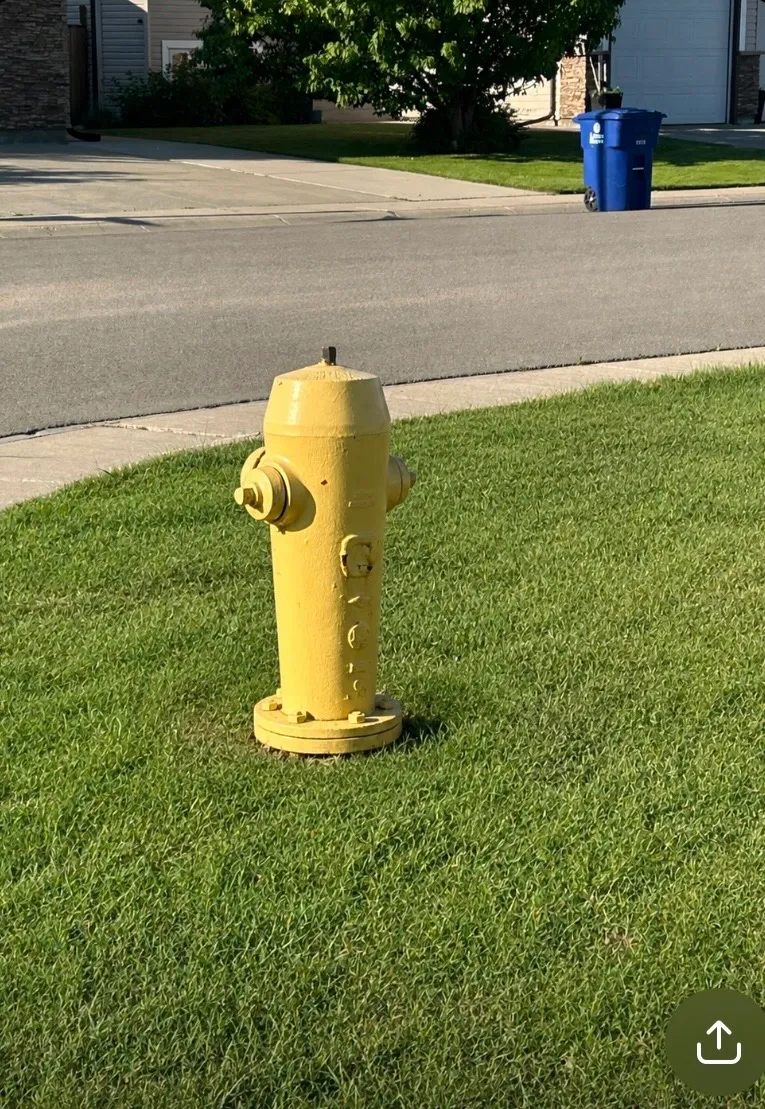
Fire hydrant inspection and repair scope
- 01 Complete rebuild or replacement Full replacement of internal components: stem, seat, main valve, o-rings and drain assembly.
- 02 Repair or replacement of worn parts Caps, chains, nozzles, gaskets, operating nuts and bonnets restored to service condition.
- 03 Drainage and groundwater protection Drain verification and plug installation to prevent groundwater entry and reduce the risk of cross-contamination.
- 04 Water flow and performance testing Static and residual pressure, flow in GPM, and available fire flow recorded per hydrant.
- 05 Winterization Pumping and drying of barrels so hydrants stay operable through a Saskatchewan winter.
- 06 NFPA 25 inspections Annual and post-use inspection to code, with the report to match.
- 07 Operational checks and preventative maintenance Full open-and-close cycling, lubrication, and paint or marker condition.
- 08 Raising and lowering hydrants Adjustment to maintain proper height and clearance at finished grade after paving or landscaping.
Makes we service
Reporting
Each hydrant is reported individually: identifier and location, make and year where legible, static and residual pressure, measured flow, condition of caps, chains, stem and drain, work performed, parts replaced, and any deficiency requiring follow-up. Photos accompany every asset. The deliverable is a single PDF you can file for compliance, forward to your insurer, and use to plan the next budget cycle.
Common questions
- How often do private fire hydrants have to be inspected?
- NFPA 25 calls for inspection at least annually and again after any use, with a flow test on the same annual cycle. The point of the schedule is that a hydrant can look serviceable and still fail under flow, so condition and performance are checked separately.
- Who is responsible for a hydrant on private property?
- The property owner. A municipality maintains the hydrants on its own distribution system in the public right of way; a hydrant fed by a private service main on private property is the owner’s to inspect, test, repair and document. If it is unclear where the boundary falls on your site, the municipality can confirm it.
- What is the difference between an inspection and a flow test?
- An inspection is a condition and operability check: caps, chains, threads, the operating nut, the stem, paint, obstruction and drainage. A flow test measures what the hydrant actually delivers, recording static and residual pressure and flow in GPM so an available fire flow can be calculated. A full annual visit covers both.
- What do the colours on hydrant bonnets and caps mean?
- NFPA 291 sets out colour coding by the flow the hydrant can deliver: light blue for 1500 GPM or more, green for 1000 to 1499, orange for 500 to 999 and red for under 500. Marking a hydrant tells responding crews what to expect before they connect, which is only useful if the colour reflects a current test.
- What does a hydrant need before a Saskatchewan winter?
- It needs to drain. A dry-barrel hydrant is designed to empty below the frost line after use, and a blocked drain leaves water standing in the barrel to freeze, which can crack the barrel and will stop the hydrant opening when it is needed. Winterization is drain verification and pumping the barrel dry.
- What happens if a hydrant fails?
- The deficiency is recorded with the asset, along with what it would take to correct it, so it can be repaired on the same visit where practical or scheduled and budgeted where it is larger. Repairs are retested and the result documented.