
Water Main & Valve Control
When a main breaks, the only thing that matters is whether the valve closes. Valves that have not been exercised seize, boxes fill with dirt and asphalt, and curb stops disappear under landscaping. Prairie Underground finds them, operates them, and restores them so isolation is possible on the day it is needed.
Every valve exercised is recorded with turn count, direction, condition and box depth, to municipal practice.
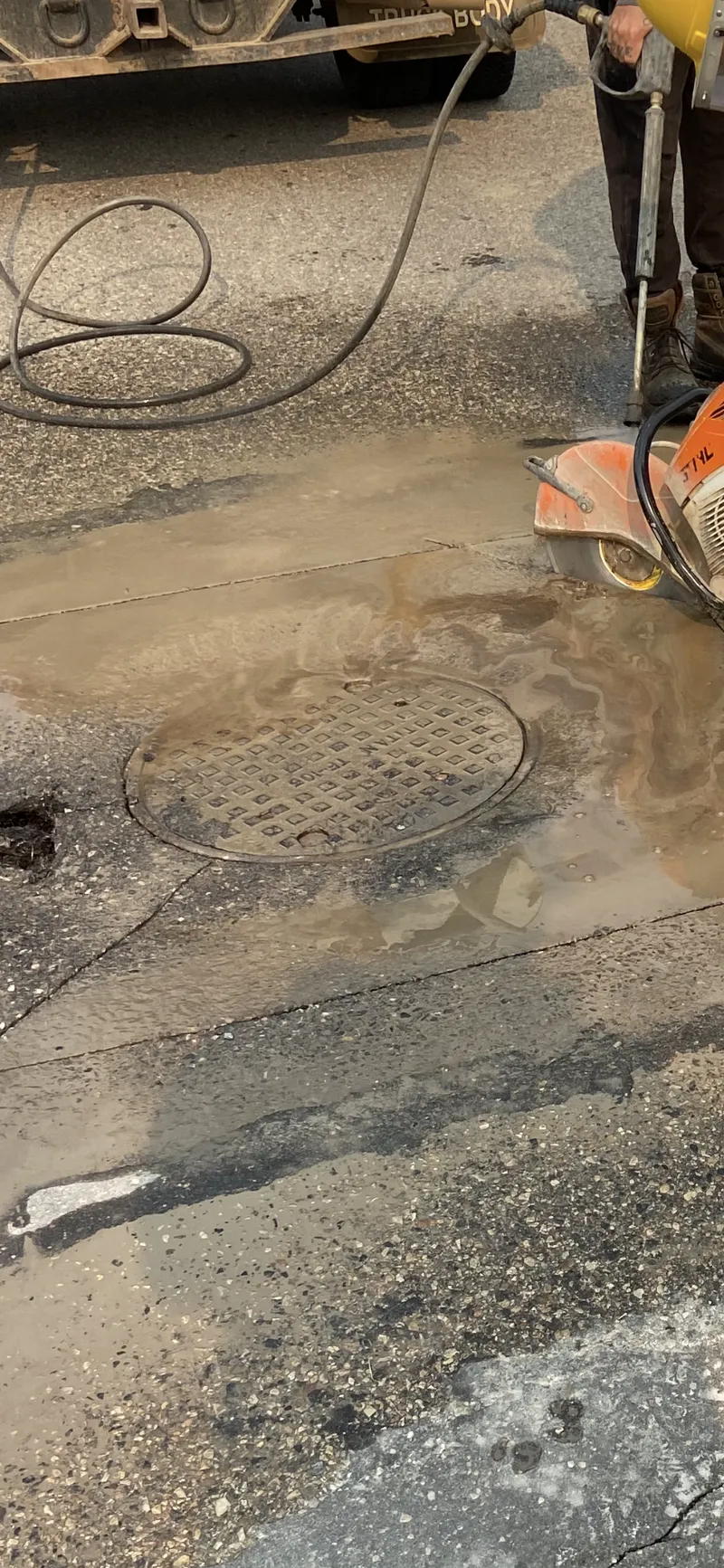
Valve exercising and valve box scope
- 01 Valve exercising and operation Full open-and-close cycling with turn counts recorded, so seized valves are found before an emergency does.
- 02 Valve box raising and lowering Boxes reset to finished grade after paving, overlay or settlement.
- 03 Box cleaning and repair Removal of dirt, gravel and asphalt from the box, and replacement of broken lids and risers.
- 04 Locating buried valves and curb stops Recovery of assets lost under sod, landscaping or new pavement, then marked and recorded.
- 05 Water main isolation support Shut-down assistance for repairs, tie-ins and planned service interruptions.
- 06 Valve inventory and mapping notes A documented list of what you have, where it is and what condition it is in.
Why it matters
A valve box standing above grade is the first thing a snow-clearing blade finds, and the damage runs down into the valve itself. A sunken box is a trip hazard and a hole that fills with debris until the key no longer seats. Settlement around boxes in parking lots and driving lanes spreads into the surrounding pavement. And a valve that cannot be closed turns a contained repair into a much larger shut-down.
Common questions
- What is valve exercising?
- Operating a valve through its full travel, closed and back open, and recording how it behaved. A valve that is never turned corrodes in place, collects debris on the seat and eventually will not move, which is discovered at the worst possible moment. Exercising keeps it free and proves it still works.
- How often should valves be exercised?
- Common practice is an annual cycle on critical valves — those isolating a hospital, a school, a main feeder or a large service — with the rest of the system worked through on a rotation so every valve is reached within a few years. The right interval depends on the size of your system and the condition it is in.
- Why record the turn count?
- A valve has an expected number of turns for its size. Reaching closed in fewer turns than it should suggests debris or a broken stem; more turns than expected, or no resistance at all, suggests the stem is turning without moving the gate. The count is the cheapest diagnostic there is, and it is only useful if it is written down and kept.
- Can you find a valve or curb stop that has been paved or landscaped over?
- Usually. Records, measurements from fixed features and a systematic sweep of the area recover most buried assets. Once found, the box is brought back to grade and the location recorded so it is not lost again.
- What if a valve will not close fully?
- It gets documented rather than forced. A valve that will not seat is a planning problem as much as a repair one, because it changes which valves you would actually use to isolate a break. The report identifies it, and repair or replacement can be scoped from there.